In Japan the main regions for wine production, listed in order of production volume of wine made from domestically grown grapes, are Yamanashi (31%), Nagano (23%) and Hokkaidō (17%). With almost 500 wineries in Japan, their wines just keep growing in popularity and quality. According to ancient legend, grapes found their way to Japan during the Nara period. They are said to have been introduced from the Tang Dynasty via the Silk Road. The Koshu variety, which has a long history in Japan, is believed to have been introduced to Koshu City, Yamanashi Prefecture, during the Kamakura period. After the East Asian variety of European grapes made its way from China. Koshu grapes gained popularity during the Meiji period, Japanese grape cultivation also saw the introduction of varieties like Delaware and Campbell grapes, which are hybrids of European and American grapes.
The most popular grape variety now is Kyoho. This varietal was first produced in 1937, in Shizuoka prefecture and was given its present name in 1946. They can be served peeled as a dessert, and the juice is used in making chūhai cocktails. In 2024, the Japanese wine market hit $30.2 billion, and is forecast to reach $44.8 billion in under a decade.
Unlike wine Saki is made of rice, Japan’s most treasured grain, it is more than just a popular drink. It also plays an essential role in many aspects of Japanese tradition and culture. Sake is a beverage category unto itself. The rice used to make sake is not your everyday long-grain variety, but a special strain of rice that undergoes polishing to remove its outer layers. The more the grain is polished the higher quality the sake is likely to be. It’s a long and detailed process, traditionally handed down in Japan through family lines. The alcohol content of sake is typically between 15-17% ABV, higher than wine and lower than spirits. Sake can generally be categorised into two flavour profiles: fragrant (Ginjo) or savoury (Non-Ginjo). Ginjo styles tend to have fruity and floral aromas, while Non-Ginjo have more cereal and earthy characteristics.
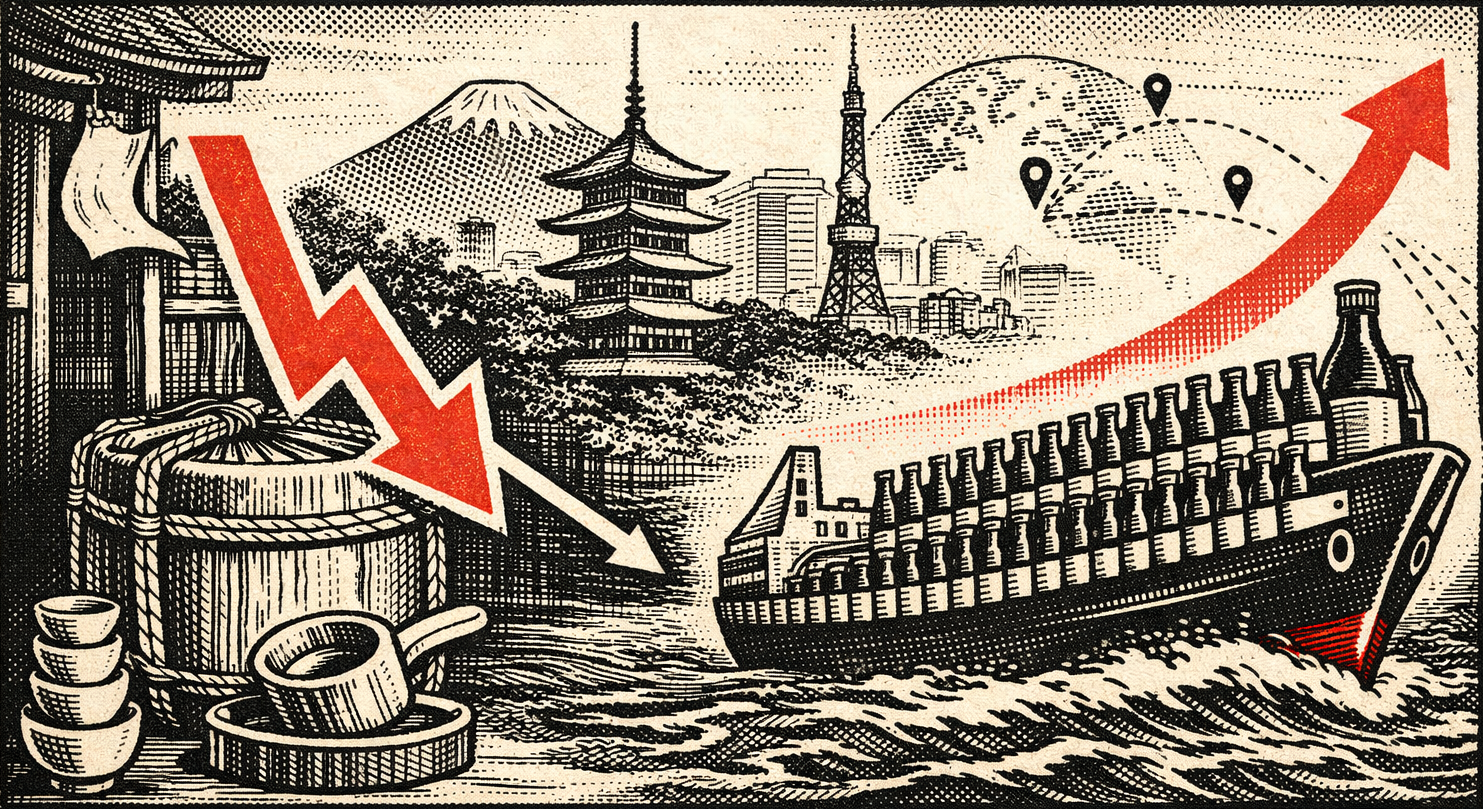
There are many styles of sake from cloudy, to sparkling, sweet or aged. There is simply no one style, with something to suit most tastes. Economic factors such as rising production costs and competition from cheaper imported beverages plus changing drinking habits have contributed to a decline in sake consumption in Japan. However the latest figures for sake’s export performance, released by Japan’s Ministry of Finance, show a category in splendid health. The export totals increased both in volume and value year-on-year compared to 2024, while sake is now exported to 81 markets. The volume of sake shipped grew by 8%, hitting a total of 33.55 million litres, while the export value reached ¥45.9 billion, an increase of 6%. This means that sake exports hit the second-highest level on record and that the value of sake exports has approximately doubled since 2020 – a compound annual growth rate (CAGR) of 14%.